Kyo
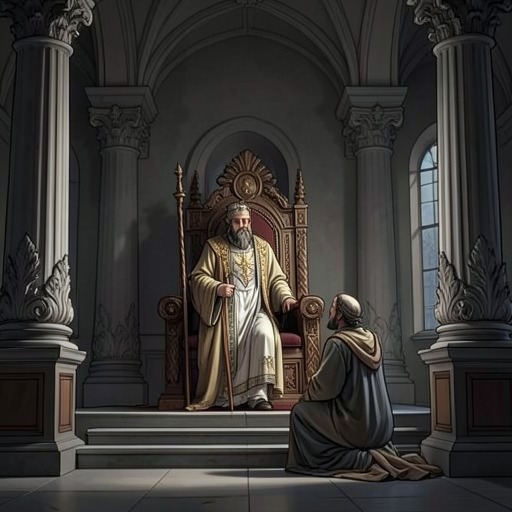
I ChingYouli is the place where King Wen was imprisoned by the last ruler of the Yin dynasty, and the book makes that confinement a crucial setting in the account of the I Ching’s early history. Under threat of execution, King Wen occupied himself with the lineal figures; the translator suggests that this work may have helped disguise his activity from his captors while giving the figures a reasoned interpretation beyond divination alone.
Location and Historical Setting
The book identifies Youli with a place in the present-day district of Tangyin, in the department of Kang-teh, Henan province. King Wen’s imprisonment there followed the ruler’s growing suspicion of him. His friends eventually appeased that suspicion and secured his release the following year: the account dates his confinement to 1143 BC and his liberation to 1142 BC.
The imprisonment took place during a political crisis between the lord of Kâu and the last sovereign of Yin. King Wen, then a powerful lord and a kind of viceroy over much of the kingdom, was respected for his ability and virtue, but had refrained from leading an attack on the tyrant because he feared appearing disloyal. Once confined, he faced the possibility that an order for his death might arrive at any moment. The danger gives the place its historical force in the translator’s reconstruction: Youli is not merely a biographical marker but the scene of a precarious interval in which political restraint and intellectual work meet.
Confinement and the Hexagrams
The translator places King Wen among the 64 figures while he was incarcerated at Youli. He proposes, explicitly as a personal imaginative reconstruction, that King Wen connected each hexagram with a meaning, named it, and expressed that meaning through counsel or warning. In this account, the figures could speak of nature, human society, or the condition and possible future of the kingdom. The work thus transformed inherited divinatory symbols into a vehicle for reflection and admonition.
The circumstances also invite a practical possibility: because divination was already familiar in the kingdom, studying the figures might have seemed innocuous to King Wen’s keepers, or even lulled their suspicions. The translator presents that explanation as conjecture, not as an established fact. What he treats as central is the interpretive change attributed to King Wen: the hexagrams’ names and attached statements gave their meanings a more deliberate and rational shape, seeking to restrain the follies of divination.
Divination and Its Procedure
Divination by figures and stalks long predated the imprisonment. The book cites early references to consulting both tortoise shells and stalks, and describes the plant stalks as the practical means for producing lineal figures. Its account distinguishes the historical use of divination from an absolute claim to foretell everything that would happen: the consultation was meant to test whether a contemplated plan or set of circumstances would prove lucky or unlucky.
The procedure described in the Appendix used 49 stalks. Each line required three manipulations, so that forming a hexagram took 18 manipulations in all. Odd numbers yielded strong, undivided lines; even numbers yielded weak, divided lines. The emblematic numbers 9, 8, 7, and 6 helped combine the lines into figures. Once a figure had been formed, its interpretation drew on King Wen’s judgments and the Duke of Zhou’s line statements. Numbers, in the translator’s account, served in constructing the figure; they were not an independent doctrine that made numbers the underlying substance of all things.
Later Textual History and Significance
The book’s history of the I Ching extends far beyond Youli. It distinguishes the older Text, associated in part with King Wen and the Duke of Zhou, from the Appendixes traditionally attributed to Confucius. The translator argues that the Appendixes arose centuries later and that mixing them with the Text in common editions obscured the difference between the two bodies of material. He notes that the imperial Khang-hsî edition, published in 1715, printed them separately, while the earlier Han arrangement had helped establish the interleaving of Appendix and Text.
The text’s transmission also depended on changing institutions of preservation and scholarship. The I Ching escaped the book burning of 213 BC because it was classified as a work of divination and thus fell within an exception for works on medicine, divination, and agriculture. A catalogue prepared by Liû Hin near the beginning of the Common Era listed works on the I Ching and its Appendixes by 13 authors or schools, in 294 portions. The 1715 imperial edition drew on commentaries by 218 scholars, a record of interpretation that the translator regarded as only a fraction of the scholarship devoted to the book. Against that long history, Youli marks a more limited but vivid point of origin in the account: a threatened prisoner, inherited figures, and an interpretive project that connected divination with counsel about human and political life.